


news
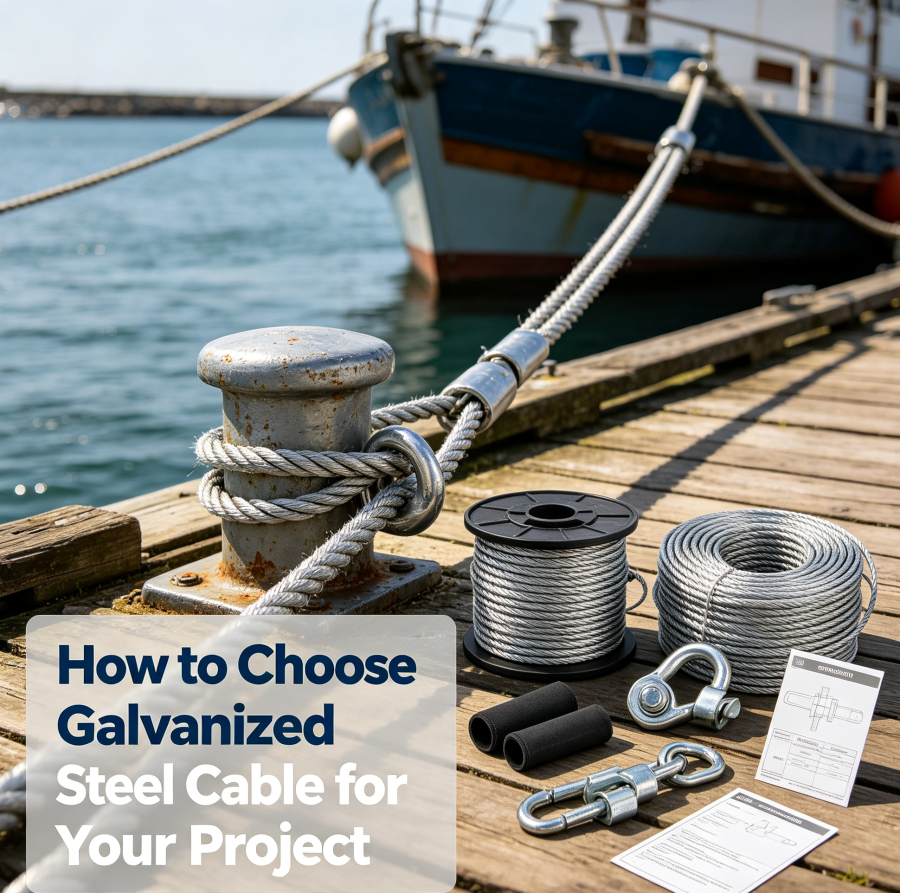
How to Choose Galvanized Steel Cable for Your Project
Choosing the right galvanized steel cable can feel confusing when you are standing in the hardware aisle or scrolling through product listings. The labels are full of numbers, construction codes, and strength ratings that are easy to misread. Picture uncoiling a stiff new cable on a Saturday morning and realizing the diameter does not fit your swages. This guide walks you through the selection process in plain English. You will learn how to match the cable to your project, compare specifications safely, and avoid paying for more than you need.
Key Takeaways
- Galvanized steel cable works best for inland outdoor, mostly static projects like railing, fencing, and overhead lines.
- The zinc coating protects the steel core, but saltwater and repeated high-flex wear can shorten cable life.
- Always use working load limit (WLL) with a safety factor — never size cable by breaking strength alone.
- 7x7 construction bends more easily; 1x19 is smoother and stiffer for straight runs.
- Stainless steel is worth the upgrade mainly for coastal, high-chloride, or architectural visibility projects.
What Is Galvanized Steel Cable, and Why Does the Coating Matter?
Galvanized steel cable is steel wire rope covered with a zinc coating that protects the steel from rust. The zinc layer acts as a sacrificial barrier. When moisture and air attack the cable, the zinc corrodes first, leaving the steel core intact underneath. That is why galvanized cable can sit outdoors for years in the right environment without failing.
The Zinc Coating Basics
There are two common ways to apply the zinc coating. Hot-dip galvanizing dips the cable in molten zinc, producing a thicker, rougher coating that lasts longer in outdoor exposure. A thicker zinc layer simply gives the steel more years before rust can reach it. Electro-galvanizing applies zinc through an electrical process, creating a thinner, smoother finish. For most outdoor structural and agricultural projects, hot-dip galvanized steel cable is the better choice because it offers more corrosion resistance over time.
Common Cable Terms You’ll See on Labels
Product labels often mix the words cable and wire rope. In practice, the two terms overlap. Wire rope usually refers to a stranded steel cable built for load-bearing work, while cable can mean the same product in a lighter-duty context. You will also see terms like strand, core, coating, and diameter. A strand is a group of individual wires twisted together. The core is the center around which the strands wrap. Coating refers to the zinc layer. Diameter is the cable’s overall thickness, measured across its widest point.
Where Galvanized Steel Cable Works Best
Galvanized steel cable works best in outdoor, mostly static applications away from salt water. Think of projects where the cable stays in one place, holds tension, and does not bend repeatedly over pulleys or tight radii. In those conditions, the zinc coating does its job and the cable can last for many years.
Outdoor Railing, Fencing, and Overhead Runs
Common US projects that fit galvanized steel cable well include deck railing, stair railing, fence bracing, overhead clotheslines, flagpole lines, awning supports, and barn door tracks. In cable railing systems, galvanized cable offers a strong, affordable infill option. On farms and ranches, it serves as fencing tension wire, gate bracing, and general tie-down material. Overhead runs such as shade cloth lines and light-duty zip lines also work well when the load stays within the working limit. A 100-foot shade cloth line over a patio, for example, needs to hold wind load across its entire run, not just the weight of the cloth itself.
When to Choose a Different Cable
Galvanized steel cable is not ideal for every environment. Avoid it near saltwater, where chloride exposure quickly eats through the zinc and reaches the steel core. Within a few miles of the coast, salt mist can strip zinc in a few years, which is why many coastal contractors skip straight to stainless steel. Also avoid it in repeated high-flex applications such as winch lines, crane cables, or anything running over a pulley many times per day. The zinc coating can crack under constant bending, exposing bare steel. For those conditions, stainless steel cable or a specialized wire rope is usually the safer long-term choice.
How to Read Galvanized Steel Cable Specifications
Reading a galvanized steel cable spec sheet is easier once you understand three things: diameter, construction, and the difference between working load limit and breaking strength. These numbers determine whether the cable will fit your fittings and handle your project load safely.
Diameter and Construction: 7x7 vs. 1x19
Diameter is measured across the widest point of the cable, including the outer strands. Common cable railing diameters are 1/8 inch and 3/16 inch, but smaller and larger sizes are available. You need to know the diameter before buying swages, thimbles, turnbuckles, or other fittings, because those parts are sized to match.
Construction describes how the individual wires are arranged. 7x7 cable has seven strands, each made of seven wires. It is more flexible and easier to work with around corners or gentle curves. 1x19 cable has nineteen wires laid in a single layer around a single strand. It is smoother, stiffer, and better for straight runs where you want a clean architectural look. Both are common in railing systems. Choose 7x7 when the cable needs to bend during installation. Choose 1x19 when the run is straight and you want minimal stretch and a smooth surface.
Working Load Limit vs. Breaking Strength
This is the most important safety distinction in cable selection. Breaking strength is the load at which the cable fails. It is a laboratory number. You should never use breaking strength as your safe operating limit. Packaging often highlights breaking strength because it looks stronger, but that headline number tells you very little about safe use. Instead, use the working load limit (WLL). The WLL is the breaking strength divided by a safety factor. A common safety factor for static, non-critical applications is 5:1. For example, a cable with a 4,000 lb breaking strength would have an 800 lb WLL at a 5:1 safety factor. If the application involves people or dynamic loads, you may need a higher safety factor such as 7:1 or 10:1. Always check local code requirements for railing and structural projects.
How to Choose the Right Galvanized Steel Cable for Your Project
Instead of starting with a product catalog, start with your project requirements. A simple three-step sequence will help you narrow down the options quickly.
Step 1: Match the Environment
Ask yourself where the cable will live. Is it inland or coastal? Will it be exposed to rain, snow, or humidity? Is there chemical exposure such as fertilizers, pool chemicals, or industrial runoff? For inland outdoor projects with normal weather exposure, galvanized steel cable is usually a solid match. For saltwater, high-chloride, or chemical-heavy environments, move to stainless steel. The environment decision should come first because it determines whether galvanized coating is even a viable option.
Step 2: Estimate Load and Safety Factor
Next, estimate the actual load the cable will carry. Include not just the static weight, but also dynamic forces such as wind, snow, ice, or a person leaning against a railing. Once you have an estimated working load, look for a cable whose WLL exceeds that number. Use the safety factor appropriate for your application. For a deck railing infill cable, local codes may specify a minimum breaking strength or tension requirement. Follow those requirements rather than guessing. Never size a cable by breaking strength alone. If you are unsure, write down the estimated load, divide it by the number of cable runs sharing that load, and compare the per-cable load against the WLL. That habit alone avoids most undersized-cable mistakes.
Step 3: Confirm Fittings and Flexibility
After environment and load, check that the cable diameter matches your fittings. Swages, thimbles, turnbuckles, and tensioners are all diameter-specific. If you already own fittings, buy cable to match them. If you are buying everything together, choose a diameter that gives you adequate strength and a clean appearance. Then think about flexibility. A 7x7 cable works better for runs that need to wrap around a thimble or make a gentle bend. A 1x19 cable is better for straight, high-tension runs where smoothness matters. Confirm the construction before you order, not after the cable arrives.
Installation and Care Tips That Extend Cable Life
How you install and maintain galvanized steel cable matters as much as how you choose it. A few simple habits can add years to the cable’s service life and avoid common failures.
Cutting, Swaging, and Kink Avoidance
Use proper cable cutters, not standard wire cutters or bolt cutters. Cable cutters produce a clean end without smashing the strands. After cutting, use a swaging tool to secure fittings. Do not hammer the swage or use improvised methods, because a loose swage can slip under load. A hammered swage may look fine at first, but it can slip at a fraction of the rated load, turning a railing cable into a dangerous projectile. Always use thimbles where the cable loops through an eye or fitting. Thimbles protect the cable from sharp bends and abrasion. Many DIYers skip thimbles to save a few dollars, but the sharp bend against an eyebolt creates a weak point that shortens cable life. Avoid kinking the cable during uncoiling. Pull the cable straight from the coil rather than letting it twist. A kinked galvanized cable is permanently weakened and should be replaced, not straightened.
Inspection and Touch-Up Routine
Inspect galvanized steel cable at least once a year, and more often in harsh conditions. Look for rust spots, broken strands, flattened sections, or areas where the zinc coating has worn away. If you cut the cable during installation, the exposed steel ends will rust unless you touch them up. Use a cold galvanizing spray on cuts, scrapes, and worn spots. This adds a fresh zinc layer and slows corrosion. Replace the cable if you see multiple broken strands, deep pitting, or any section that no longer holds its original diameter.
Galvanized Steel Cable vs. Stainless Steel Cable
The most common upgrade question is whether to buy galvanized steel cable or stainless steel cable. The answer almost always comes down to environment and long-term cost, not just the price on the tag.
Cost vs. Corrosion Resistance
Galvanized steel cable costs significantly less than stainless steel upfront. For most inland outdoor projects, the corrosion resistance is sufficient. Stainless steel cable, especially grade 316, offers much better resistance to salt, chlorides, and industrial pollutants. If your project is within a few miles of the coast, near a pool, or in a high-visibility architectural setting, stainless steel is usually the better long-term choice.
Making the Budget Call
Think about replacement cost, not just initial purchase price. If galvanized cable will need replacement in three to five years due to corrosion, while stainless steel would last fifteen years, the stainless option may be cheaper over the life of the project. Also consider access for inspection. If the cable is hard to reach or embedded in a railing system, choosing the more corrosion-resistant option upfront makes sense. For inland, accessible, budget-driven projects, galvanized steel cable remains a strong and practical choice. If a deck cable rail faces afternoon sun and winter snow but sits 50 miles inland, galvanized steel cable will likely outlast the deck boards themselves.
Before you buy, compare diameter, coating, construction, strength, and fittings side by side. Download the free galvanized steel cable selection checklist to compare these factors and make a confident decision on your next project.
Frequently Asked Questions
What is galvanized steel cable used for?
It is commonly used for outdoor railing infill, fence bracing, overhead clotheslines, flagpole lines, awning supports, and barn door tracks. The best applications are mostly static and inland, where the zinc coating can protect the steel without constant flexing or salt exposure.
What is the difference between 7x7 and 1x19 galvanized steel cable?
7x7 cable is more flexible and easier to wrap around thimbles or gentle bends, making it a good choice for installation that requires some handling. 1x19 cable is stiffer and smoother, so it works better for straight, high-tension runs where you want a clean architectural appearance.
How is working load limit calculated for galvanized steel cable?
Working load limit is the breaking strength divided by a safety factor. For static, non-critical uses, a 5:1 safety factor is common, so a cable with a 4,000 lb breaking strength would have an 800 lb working load limit. Applications involving people or dynamic loads may require a higher safety factor such as 7:1 or 10:1.
Does galvanized steel cable rust or corrode outside?
It resists rust because the zinc coating acts as a sacrificial barrier, but it is not immune. Inland outdoor applications are usually fine, while coastal salt mist and high-chloride environments can strip the zinc quickly and expose the steel core. Annual inspection and cold galvanizing touch-ups help extend cable life.
How do you cut galvanized steel cable without fraying?
Use dedicated cable cutters rather than standard wire cutters or bolt cutters, and uncoil the cable straight to avoid kinking. After cutting, secure fittings with a proper swaging tool and touch up exposed steel ends with cold galvanizing spray to slow corrosion.
Tags:coil cable | coiled cable lanyard | security cable
0users like this.
